
Why Farming Needs a New Definition of Innovation
- BioPrime Stories & latest news

- Why Farming Needs a New Definition of Innovation
Why Farming Needs a New Definition of Innovation
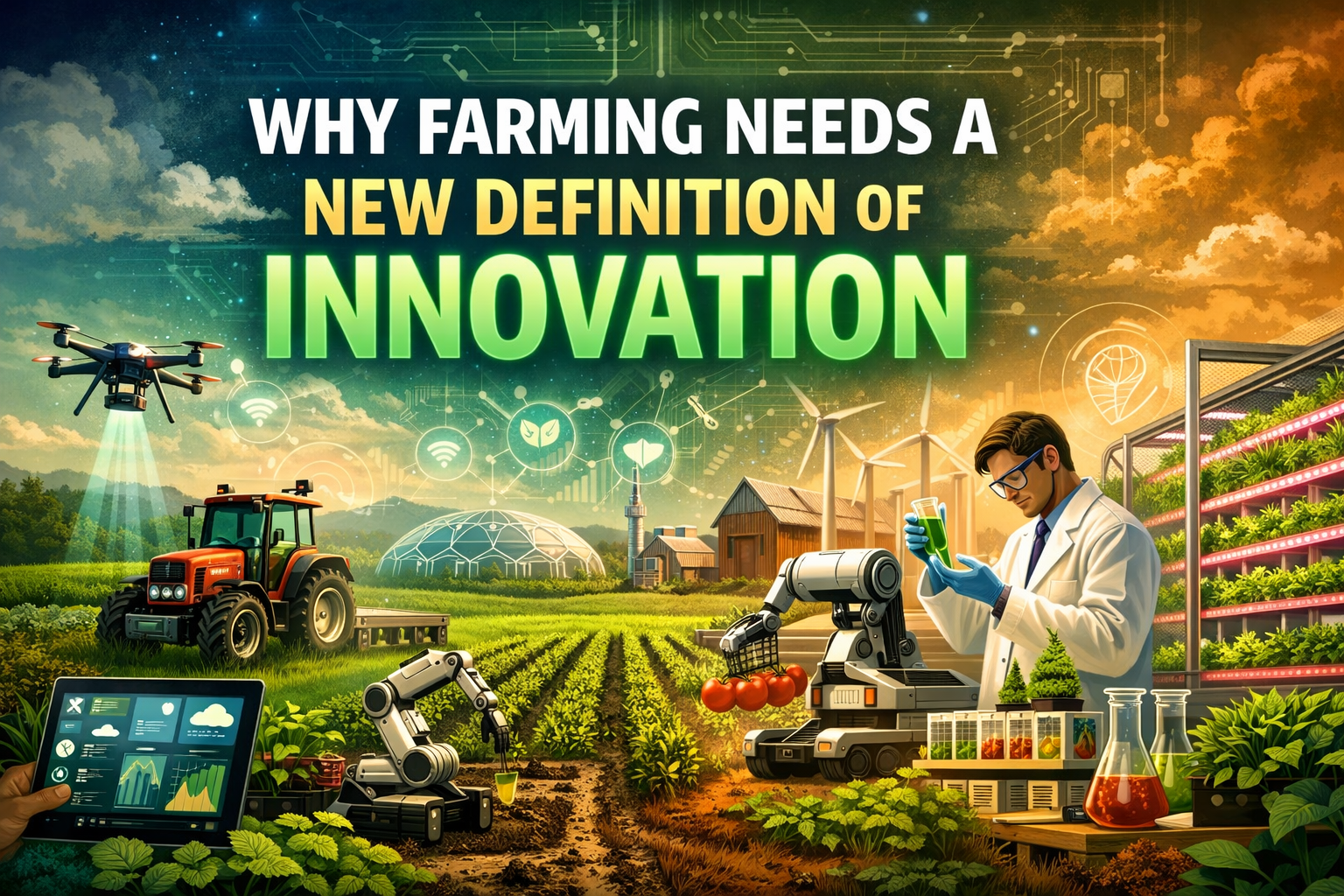
For many years, innovation in farming was seen as something new or advanced, a new product, a new machine, or a new technology. But today, farming faces more complex challenges: climate stress, soil degradation, unpredictable markets, and rising input costs. Yield alone is no longer enough—resilience, consistency, and value protection matter just as much. These problems cannot be solved by one tool or one product. Farming needs a new definition of innovation. Innovation is now needed in the way we perceive farming, in the outlook and the thought process around food systems. This shift—from input-heavy solutions to intelligently designed biologicals—is where the next chapter of agricultural innovation will be written.
At Bioprime innovation is not about novelty, speed, or adding more inputs to the farm. Innovation, for us, is the disciplined application of biology to solve real agricultural problems—designing solutions that make farming more resilient, predictable, and efficient under increasingly uncertain conditions. Innovations means outcome-driven biology. It is about understanding how plants and soil function cohesively and helping them perform better naturally.
Innovation Through Plant Physiology & Smarter Product Design
A radical shift in thought process will come when we realise that plants function as a community- there is plant-plant communication, plant-microbe communication. True innovation begins with understanding this plant physiology, understanding how plants grow, signal stress, absorb nutrients, and respond to their environment. When we support this plant as a community approach, crops become stronger, more resilient, and more productive.
At Bioprime, innovation is not just about creating a product. It is about taking a new approach and then designing formulations that work in harmony with plant systems. This means focusing on how ingredients interact with the plant, soil or microbes. The goal is clear outcomes: better yields, nutter nutrient use efficiency, stronger resilient crops, and more consistent performance.
This approach is very different from simply introducing something “new.” It is about making biology work better. Biotechnology farming represents outcome-driven biology, where plant physiology, soil health, and farm systems work together to deliver stronger crops and confident decision-making for farmers.
Soil as a Living System, Not Just a Medium
Another major shift needed is how we see soil. Soil is not a non-living medium that only holds plants upright. It is a living ecosystem. It contains microbes, organic matter, nutrients, and natural processes that support plant growth.
Innovation in farming means treating soil as a long-term asset. Instead of short-term fixes, farmers need solutions that improve soil health over time. Healthy soil improves nutrient availability, water retention, and crop resilience. When soil biology improves, farm productivity becomes more stable and sustainable.
From Products to Systems Thinking
Farming is not made up of isolated parts. Crops, soil, climate, inputs, markets, and farmer economics are all connected. That is why single products rarely solve complex problems.
Innovation today must be systems thinking. It must consider how one action affects the whole farm ecosystem. It must help farmers move from dependency on products to confidence and control in their decisions.
This new definition of innovation is practical, biology-based, and focused on real results. When innovation is driven by outcomes and supported by systems thinking, farming becomes more resilient, profitable, and future-ready.