
The Shift: From Input Intensity to Input Intelligence
- BioPrime Stories & latest news

- The Shift: From Input Intensity to Input Intelligence
The Shift: From Input Intensity to Input Intelligence
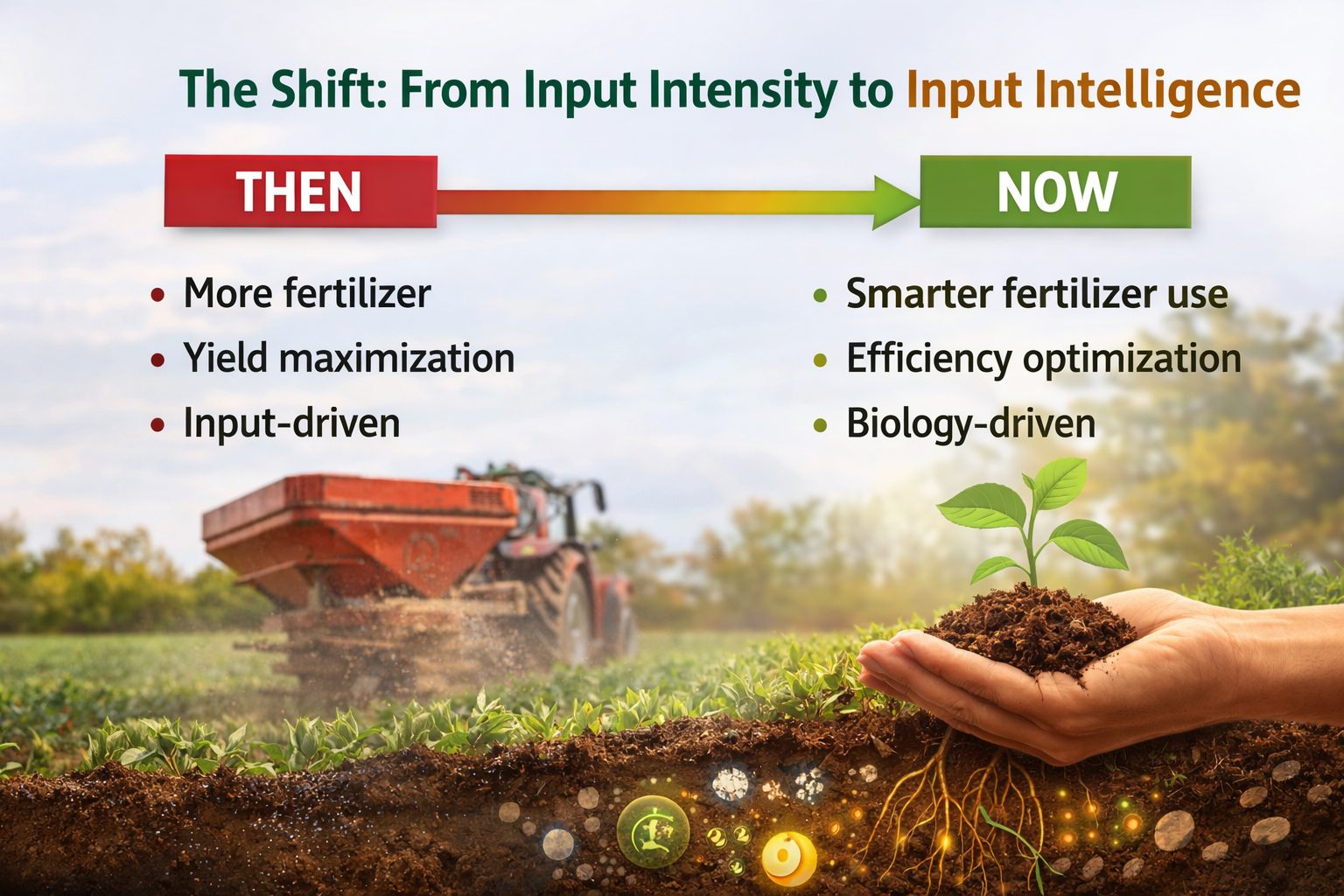
Agriculture is transitioning — slowly but unmistakably — toward a model defined by precision and efficiency rather than volume. Several frameworks are driving this shift:
4R Nutrient Stewardship
The 4R framework —
Right source,
Right rate,
Right time,
Right place
— represents a more disciplined approach to fertiliser application. When implemented well, it significantly reduces waste. But even the best 4R program has limits if plant-level uptake efficiency remains low.
Precision Agriculture
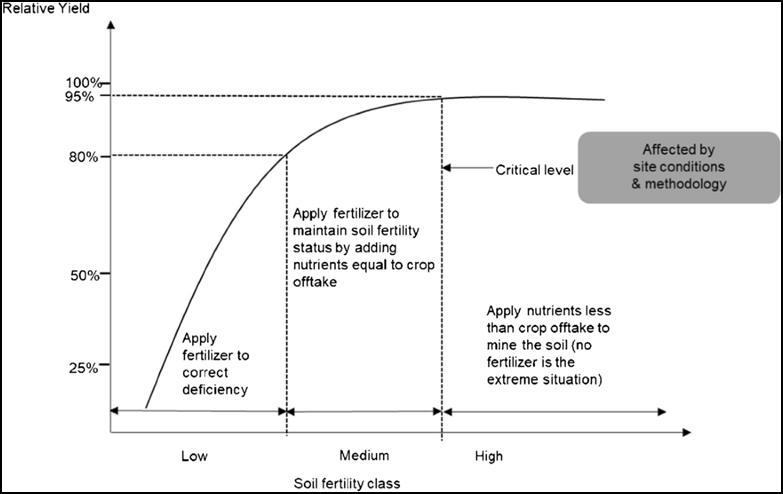
Soil diagnostics, variable-rate application technology, and targeted nutrient delivery are enabling farmers and agronomists to match inputs to actual crop needs with greater accuracy. These tools reduce over-application and improve economic returns.
Balanced Fertilisation
The integration of organic inputs, micronutrient correction, and slow-release or neem-coated fertilisers represents an important step toward more sustainable nutrient management. But even these advances have their ceiling — unless plant-level efficiency improves in parallel.
This is the gap that biological solutions are uniquely positioned to close.
The Breakthrough Opportunity: Biologicals as NUE Multipliers
Biologicals — spanning advanced biostimulants, microbial inoculants, and secondary metabolite-based formulations — are redefining the NUE equation. Unlike conventional inputs, they work by engaging the plant's own biology and the soil's living ecosystem.
Specifically, biologicals enhance NUE by:
- Improving root architecture, increasing the surface area available for nutrient absorption
- Activating and diversifying soil microbiomes that drive nutrient solubilisation and cycling
- Mobilising locked nutrients — particularly phosphorus and micronutrients — that conventional fertilisers cannot access
- Improving plant metabolic efficiency, enabling better assimilation of absorbed nutrients
The outcome is straightforward but transformative: more output from the same input.
India's Moment: Lead the Next Agricultural Revolution
The first Green Revolution solved for food availability. The next must solve for efficiency, sustainability, and resilience under climate stress.
For India, this transition is not optional. The combination of a large and diverse farming population, constrained natural resources, rising input costs, and increasing climate volatility makes the case for NUE-focused solutions more urgent here than almost anywhere else in the world.
By integrating biologicals with existing fertiliser programs, India can chart a path that delivers on multiple fronts simultaneously:
- Reduced fertiliser input dependency and better farmer economics
- Restored and sustained soil biological health over successive seasons
- Improved agronomic returns without proportional increases in input expenditure
- Lower environmental impact — reduced runoff, reduced emissions, reduced subsidy burden
The global shift toward biological NUE enhancement is already underway. Markets in Europe, North America, and Latin America are integrating biological NUE products at scale. India has an opportunity to be ahead of that curve — not catch up to it.
Conclusion: The Future Is Not More — It Is Better
The paradigm is shifting. Where agriculture once asked 'how much can we apply?', the defining question of the next era is: how much can the plant actually use?
|
Then |
Now |
|
More fertilizer |
Smarter fertilizer use |
|
Yield maximization |
Efficiency optimization |
|
Input-driven |
Biology-driven |
Solving for NUE — through precision agronomy, informed policy, and above all, through the application of biological science — is the key to the future of Indian agriculture. Nutrient Use Efficiency sits right at the centre of that transformation.
Bioprime is building for this future — where biology enhances efficiency, and efficiency drives sustainability.