
Can Microbes also help in Abiotic Stress (Heat, Drought & Salinity) management?
- BioPrime Stories & latest news

- Can Microbes also help in Abiotic Stress (Heat, Drought & Salinity) management?
Can Microbes also help in Abiotic Stress (Heat, Drought & Salinity) management?
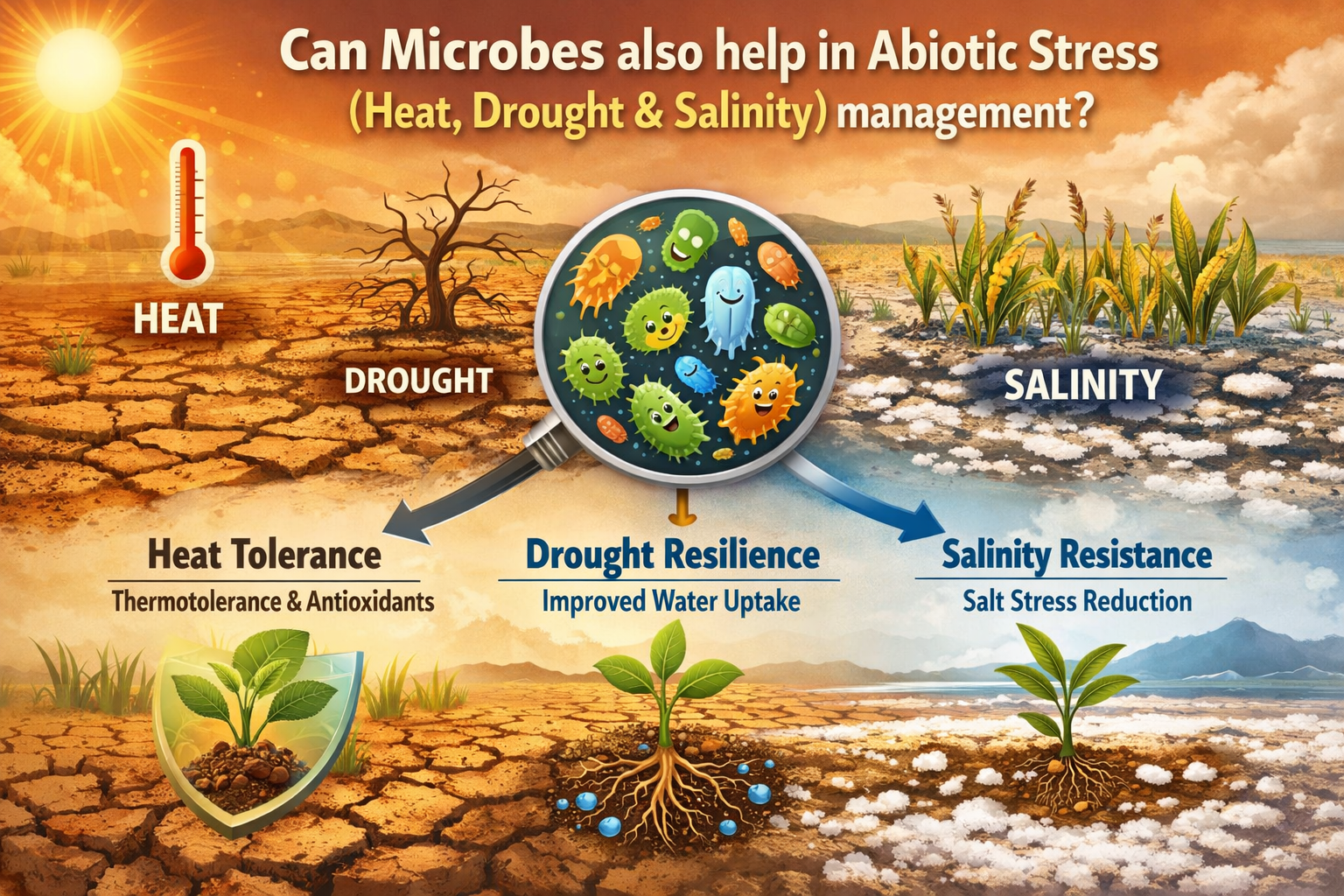
In modern organic farming, microbesare no longer just about mobilizing nutrients. Crops today face extreme environmental pressures, so microbial biostimulants must go beyond nutrition and help plants build real resilience.
At BioPrime, stress protection means activating the plant’s natural defense and adaptation systems. Instead of offering temporary relief, the focus is on restoring plant strength from the root zone.
This includes:
● Root-zone regeneration, helping roots recover and grow even during stress
● Restoring the core microbiome that is needed for optimum functioning of any plant
● Extending plant root’s reach by building a hyphal network
● Metabolic reboot, allowing crops to continue growth during stress periods
India’s Stress Landscape: Context Matters
India’s agriculture faces multiple environmental challenges. Crops often experience layered stress cycles such as prolonged heat waves, saline soils in high EC regions, and increasingly unpredictable rainfall.
Because of this complexity, blanket organic solutions rarely work. Soil biology differs from region to region, stress timing varies across crops, and microbial survival changes depending on climate conditions.
Effective stress management must therefore be region-specific, crop-specific, and growth-stage specific. This is why BioPrime focuses on formulations designed to adapt to different agricultural environments rather than offering a one-size-fits-all approach.
Formulation Characteristics That Matter Under Stress
Many microbial solutions fail under harsh conditions because their formulations are not built for stress environments. A stress-ready product must provide:
● Rapid rhizosphere activation for immediate microbe establishement
● Low EC levels to avoid adding salt stress to the soil
● High microbial survival in heat& drought
● Stable shelf life and field performance
● Compatibility with organic spray programs
Microbes + Biomolecules vs Active Ingredients Alone
Another common misconception in farming is that a single active ingredient can solve complex stress problems. Real stress resilience comes from biological synergy. The most effective solutions combine beneficial microbes with biological metabolites that support plant physiology.
The right system includes:
● Restoring the core microbiome
● Beneficial microbes that activate plant defense and adaptive pathways
● Root stimulators that encourage deeper and stronger root growth
● Stress signaling compounds that help plants adapt faster
● Carbon sources that nourish soil biology, not just the plant
Mode of Action: What Changes Inside the Plant
When the right microbial strains are used in a biostimulant, several internal plant responses are activated. Soil organic carbon improves, C:N balance is achieved, Microbiome is restored, crops show improved growth and resilience even during drought, heat or unseasonal rain. Ultimately, this leads to better plant survival and yield preservation, even under prolonged environmental stress.